
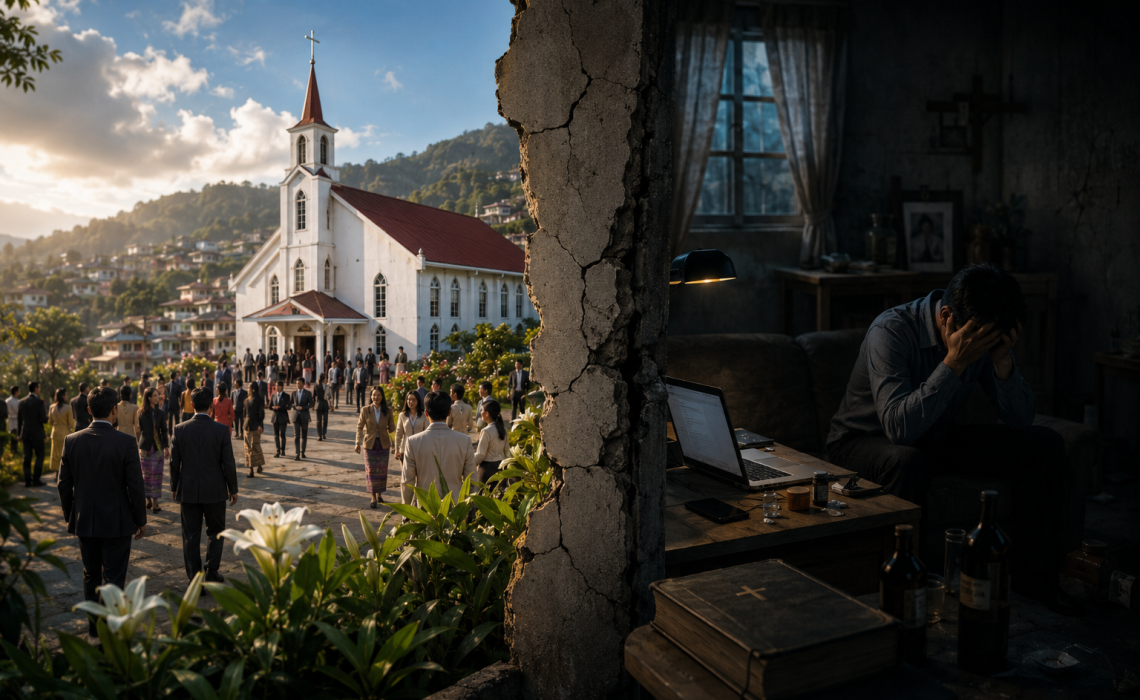
‘But when anything is exposed by the light, it becomes visible” Ephesians 5:13
In contemporary Mizoram, Christianity is not a minority faith struggling for survival. It is the cultural center of society. Churches are full. Christian language is everywhere. Christian identity remains strong
Yet beneath that visible strength, there is growing evidence of deep crises involving:
* Drug addiction
* HIV/AIDS
* Unsafe sexual behaviour
* Youth alienation
* Loneliness and mental health struggles
* Hidden pornography and digital addictions
* Family breakdown
* A culture of secrecy and shame around personal failure
Mizoram continues to face one of India’s most serious HIV crises, with health authorities repeatedly linking most new infections to unsafe sex and injecting drug use. A large percentage of cases involve young adults.
What makes this especially significant for the church is that these are not simply “outside society” problems anymore. They exist inside Christian families, youth groups, congregations, and communities.
⸻
The issue beneath the issue: silence
Many societies struggle with drugs or sexuality.
What makes the Mizo situation unique is that the culture places a high value on:
* Respectability
* Community reputation
* Moral expectations
* Public conformity
Those values can be beautiful and socially stabilizing.
But they can also create a situation where people become afraid to admit:
* “I’m addicted.”
* “I’m depressed.”
* “I’m having sexual problems.”
* “I’m losing my faith.”
* “I need help.”
When confession becomes difficult, suffering goes underground.
The result is that churches can become very good at identifying sin, but less effective at creating spaces where people can honestly reveal their wounds.
⸻
A generation that knows Christianity but is searching for authenticity
Many young Mizos are not rejecting Christianity because they hate Christ.
Often they are wrestling with questions such as:
* Is faith real or merely cultural?
* Can I be honest about my struggles here?
* Does the church understand modern life?
* Why do I see a difference between what is preached and what is lived?
* Is Christianity merely a moral system, or is it genuine transformation?
This may be the biggest spiritual challenge facing the next generation.
The danger is not atheism.
The danger is nominal Christianity—people retaining the Christian label while becoming spiritually disconnected.
⸻
What the church may need to talk about more
Instead of only discussing whether people are obeying Christian rules, churches may need to speak more openly about:
* Addiction
* Trauma
* Mental health
* Sexual temptation
* Loneliness
* Marriage difficulties
* Digital life
* Genuine repentance
* Grace and restoration
Many young people already know what Christianity teaches.
What they often need is evidence that the church is a place where broken people can tell the truth without being destroyed socially.
⸻
Why this matters more than politics
There are many other important issues:
* Preservation of Mizo identity
* Migration and demographic anxieties
* Denominational divisions
* Consumerism
* Social media culture
* Economic opportunities for youth
But all of those become secondary if a generation is quietly struggling with addiction, HIV, depression, and spiritual disconnection while feeling unable to speak honestly about it.
The question facing Mizoram may not be:
“Can Christianity survive?”
Christianity is deeply rooted in Mizoram.
The deeper question may be:
“Can the church become a place where people can stop pretending?”
If that gap between public faith and private reality is addressed, many of the other social and spiritual problems become far easier to confront. The drug crisis, HIV crisis, and youth disillusionment are not merely medical or moral problems; they are also crises of truth-telling, community, and discipleship.
A possible theme verse for contemporary Mizoram
If I had to choose one passage that speaks most directly to the challenge of maintaining a Christian image while hiding real struggles, it would be:
“Whoever conceals their sins does not prosper, but the one who confesses and renounces them finds mercy.”
— Proverbs 28:13
It captures both the problem and the solution:
* Concealment is spiritually destructive.
* Mercy begins with honesty.
That message applies not only to individuals struggling with addiction, HIV, pornography, depression, or doubt, but also to churches and entire Christian communities. A revival in Mizoram may not begin with better programs or louder preaching. It may begin when Christians feel safe enough to tell the truth.
Discover more from NUN HRUAITU
Subscribe to get the latest posts sent to your email.